
🚀 The Ultimate Guide: How to Start Blogging in 2026
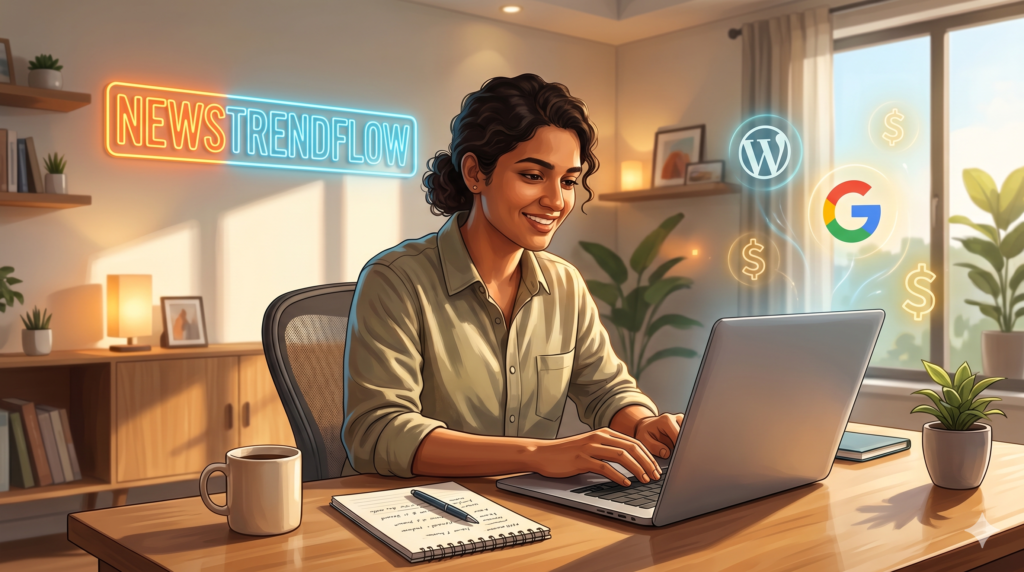
Have you ever wondered how some people make a full-time living just by typing on a laptop? They aren’t magicians; they are Bloggers.
In 2026, the digital landscape has changed. AI is everywhere, social media is noisy, and attention spans are short. You might ask: “Is it too late for me?” The answer is a loud NO.
In fact, 2026 is the best year to start. Why? Because the internet is tired of robotic, AI-generated fluff. People are craving authentic human voices. They want to hear from you.
This guide is your roadmap. We will cover every single detail of how to start blogging, from the very first click to your first paycheck. Grab a coffee, and let’s build your empire.
💎 Chapter 1: The Philosophy of Blogging in 2026
What is Blogging Today?
Ten years ago, a blog was just a text diary. Today, a blog is a Multi-Media Hub. It’s a place where text, images, short-form video, and community interaction live together.
The “Experience” Economy
Google recently updated its ranking system to favor E-E-A-T (Experience, Expertise, Authoritativeness, and Trustworthiness). In 2026, the “Experience” part is king. Google wants to know: Have you actually used this product? Have you actually traveled to this place? Your unique human experience is your greatest SEO weapon.
🎯 Chapter 2: Finding Your “Golden” Niche
The biggest reason 90% of blogs fail is a bad niche. If you write about “Everything,” you are an expert in “Nothing.”
The 3-Circle Formula
To find your perfect topic, draw three circles:
- What you love: Your hobbies (Gaming, Gardening, Yoga).
- What you know: Your skills (Coding, Math, Teaching, Cooking).
- What people buy: Market demand (Health, Money, Relationships).
Where these three circles overlap is your Golden Niche.
Micro-Niche: The Secret to Fast Ranking
Don’t start a “Travel Blog.” That’s too big. Instead, start a “Budget Solo Travel for Women in North-East India” blog. By being specific, you become the #1 expert in that small area very quickly.
🏗️ Chapter 3: Setting Up Your Digital Foundation
Now, let’s get technical, but keep it simple. To learn how to start blogging, you need to understand the “Infrastructure.”
1. The Domain Name (Your Identity)
Your domain (e.g., www.yourblog.com) is your brand.
- Avoid Trends: Don’t use “2026” in the name, or it will look old in 2027.
- Easy to Say: If you have to spell it out over the phone, it’s too hard.
- The .com Power: Even in 2026,
.comand.in(for India) remain the most trusted extensions.
2. Hosting (Your Engine)
Hosting is the service that keeps your site online 24/7.
- Speed is Non-Negotiable: In 2026, if your site takes more than 1.5 seconds to load, Google will push you to page 10.
- Recommendation: Use Hostinger or SiteGround. They offer NVMe storage (which is like a turbocharger for your blog).
3. WordPress: The Only Choice
Don’t waste time with Wix or Squarespace if you want to make money. WordPress.org (Self-hosted) gives you total control. It’s like owning your house instead of renting a room.
🎨 Chapter 4: Designing for the 2026 Reader
In 2026, people “scan” more than they “read.” Your design must facilitate this.
The “Mobile-First” Rule
85% of your traffic on newstrendflow.com will come from mobile devices. Your blog must look better on a phone than it does on a desktop.
Essential Pages Every Blog Needs
Before you publish your first post, create these:
- About Me: Tell your story. Why should people trust you?
- Contact Us: Give people a way to reach you for business deals.
- Privacy Policy: Essential for legal reasons and AdSense approval.
- Disclaimer: Protect yourself if you give advice (especially in Health/Finance).
✍️ Chapter 5: Content Strategy – Writing Like a Human
This is where you beat the AI. Here is how to start blogging with content that people actually love.
1. The Power of Storytelling
Instead of saying “5 Tips for Weight Loss,” start with: “Two years ago, I couldn’t climb a flight of stairs without gasping for air. Today, I run marathons. Here is the exact path I followed.” ### 2. Use the “Inverted Pyramid”
Put your most important information at the top. Don’t make people wait until the end of a 2,000-word post to get the answer. If they get the answer quickly, they are more likely to stay and read the rest.
3. AI as a Helper, Not a Writer
In 2026, use AI (like ChatGPT or Gemini) to:
- Generate ideas.
- Create outlines.
- Check for grammar.But never let it write the whole post. Your voice, your slang, and your “human-ness” are what rank.
🔍 Chapter 6: The 2026 SEO Masterclass
SEO is not about “tricking” Google. It’s about “helping” Google understand that you are the best result for the user.
1. Search Intent (The “Why”)
Why is the user searching? If they search “How to start blogging,” they want a guide. If they search “Best hosting for blogging,” they want a list. Give them exactly what they are looking for.
2. Semantic Keywords (LSI)
Don’t just repeat your main keyword. Use related words. If you are writing about “Pizza,” Google also expects to see words like “Dough,” “Oven,” “Tomato Sauce,” and “Italy.”
3. Core Web Vitals
This is a technical way of saying: “Make sure your site doesn’t jump around while loading.” Use a lightweight theme like Astra or GeneratePress.
💰 Chapter 7: Monetization – How to Get Paid
Let’s talk about the money! Blogging for beginners can be very profitable if you use these four pillars:
1. Display Ads (The Passive Income)
Once you hit 10,000 visitors a month, join an ad network.
- Beginners: Google AdSense.
- Intermediate: Ezoic.
- Pro: Mediavine or AdThrive (high pay!).
2. Affiliate Marketing (The Big Money)
Promote products you use. If you have a cooking blog, link to the blender you use. You get a commission at no extra cost to the buyer. Amazon Associates is the best place to start in India.
3. Digital Products (The Scalable Income)
Create an E-book or a 5-day mini-course. Since it’s a digital file, you make it once and sell it a million times.
4. Direct Brand Sponsorships
As you grow, brands will pay you to mention them. A single sponsored post on a high-traffic blog can pay anywhere from ₹10,000 to ₹1,00,000.
🛠️ Chapter 8: Tools You Can’t Live Without
To succeed in starting a blog in India, you need the right toolkit:
- Canva: For beautiful thumbnails and social media posts.
- Grammarly: To ensure your writing is professional.
- Google Search Console: To see which keywords people use to find you.
- Google Analytics: To see where your readers are coming from.
🚧 Chapter 9: The “Blogger’s Wall” – Overcoming Challenges
Most bloggers quit in month 3. This is called the “Blogger’s Wall.”
- Zero Traffic Phase: For the first 2-3 months, you might see 0 views. This is normal. Google is “sandbox-ing” you to see if you are serious.
- Writer’s Block: Keep a list of 50 ideas in your phone. Never sit down to write without knowing the topic.
- The Comparison Trap: Don’t compare your Day 1 to someone else’s Day 1,000.
📈 Chapter 10: Scaling to Page 1
Once you have 20 posts, it’s time to scale.
- Update Content: In 2026, an old post is a dead post. Update your articles every 6 months with fresh info.
- Link Building: Guest post on other blogs to get “Backlinks.” A backlink is like a vote of confidence for Google.
- Email Marketing: Your social media followers aren’t yours; the platform owns them. But your Email List belongs to you. Start collecting emails from day one.
Extensive FAQ Section
1. Is blogging better than YouTube in 2026?
They are partners, not rivals. A blog allows for deeper info and better SEO, while YouTube builds trust. Using both together is the “Power Strategy.”
2. Do I need to be a topper in English?
No! In fact, writing in simple, conversational English (Grade 6 level) is better for blogging. It makes your content accessible to everyone.
3. Can I start a blog for free?
You can, but it’s like building a house on someone else’s land. They can kick you out anytime. Spending ₹3,000 on your own domain and hosting is a small price for total ownership.
4. How many words should a blog post be?
Quality over quantity. However, for “How to” guides, Google tends to prefer long-form content (1,500 – 2,500 words) because it’s more comprehensive.
5. How do I get AdSense approval quickly?
Have 20 high-quality posts, an About page, a Privacy Policy, and a clean navigation menu. Ensure there is no “under construction” page on your site.
6. Can I blog about my life?
Only if your life solves a problem for others. Instead of “What I ate today,” write “How I ate healthy for under ₹200 a day.”
🏁 Final Words: Your Future Starts with a Click
Blogging is the only business where you can start with the price of a pizza and end with a million-dollar brand. It requires patience, persistence, and passion.
The secret of how to start blogging isn’t in the tools or the hosting—it’s in your consistency. If you can write 100 high-quality posts over the next year, your life will look very different 12 months from now.
The world is waiting for your story. Don’t let them wait any longer.
This guide was created to help you succeed. For more trending tips on digital growth, keep following newstrendflow.com.